
Quick Link Guide:
– What is a backpacking cooking stove?
– Do you need a backpacking cooking system?
– Factors to consider when choosing your stove
– What are the different types of Backpacking cooking stoves and fuel types?
– Stoves and Fuel in more detail
– White gas/Liquid Stoves
– Canister Stoves
– Alcohol Stoves
– Wood Stoves
– Solid-Fuel Stoves
– What are the pros and cons of each?
– What are currently good cooking stoves and brands?
– What are good cooking system accessories?
– Stove & Cooking Usage Tips and Tricks:
What is a backpacking cooking stove?
For fear of overcomplicating matters, a cooking system is exactly what it says, a system intended for cooking food, and boiling liquids. Mostly, when talking about a cooking system, people are referring to the stoves and the fuel used for the stove, as separate entities. Utensils, pots, grids etc, usually form part of your cooking system, but this article will mostly focus on the stoves and the fuel types.
Do you need a backpacking cooking system?
In short, yes, for most people it would be better to have one. However, depending on your budget, survival skills and preference, you could go without one. Nevertheless, at the very least, it is advised to have one as a back-up.
While it is possible to cook over an open fire, it might not always be practical or permitted. You could potentially be battling with wet and cold weather conditions, or bans on open fires in the specific area you are in.
If you are not certain whether you would need one, consider the following, if you prefer warm, or cooked food on the trail, but your survival skills suck, chances are you might be in need of a cooking system.
Lets say your survival skills are amazing and you could ignite a fire with a simple glance, but the authorities might still fine you for making a fire in a prohibited area; you still need a cooking system. Unless of course you know how to evade the authorities, but this would still be negligent on your part to make fire in a prohibited zone.
In the event of making your own fire, please remember to only use what you can pick up from the ground, and not to harm the environment or trees when collecting fire wood.
Nevertheless, a cooking system does make for a more comforting hike.
Factors to consider when choosing your stove:
Weight & Size: The weight and size of your stove could drastically affect your hike if you chose wrong. Too big and heavy could make it a burden to use, and too small might affect your cooking efficiency and time.
Elevation: Most stoves can burn at lower altitudes without a hiccup, however, only certain fuels and stoves will excel at higher altitudes.
Weather Conditions: Similar to elevation, most stoves and fuel will do well in good conditions, but certain stoves and fuels will outshine and out-burn the others in colder and wetter conditions.
Type of Hiking & Backpacking: If you are going on shorter hikes for a few days at a time, you don’t necessarily have to worry much about the type of stove or fuel, however, long-distance hikers often tend to take this into consideration when choosing a stove and fuel.
Distance & Conditions of Trail: Similar to the type of hike you plan on doing, the distance overlaps with similar considerations. You have to take into consideration how long you will have to hike before you reach resupply.
Opportunities for Resupply: Depending on the fuel type your stove utilizes, it could be more challenging to resupply along your particular route.
Type of Cooking you Plan on Doing: Certain stoves and fuels are designed to excel in different forms of cooking. Some are great for boiling water quickly, but not necessarily to simmer for long periods of time to cook food.
Effort: Some stoves require maintenance and prepping for use. You will have to gauge if you are keen on quick and convenient cooking, or more labour-intensive cooking. Each stove has it’s pros and cons.
Burn Time: Some fuel lasts longer than others, which would determine how much fuel you ought to carry with you. Fuel efficiency could be the defining difference between underestimating how much fuel to carry on the specific segment of your hike. Ultimately, less efficient fuel means you have to carry more fuel, or could potentially run out of fuel in a long segment of your hike.
REI has the following to say about the different types:
– Integrated canister systems boil water fastest while also using minimal fuel. Simmering may be possible, but it’s an afterthought in their designs
– Canister stoves boil water quickly, and some models are good to excellent at simmering—great for camp gourmets.
– Liquid-fuel stoves boil water very quickly, even in cold weather. Simmering ability varies widely by model.
– Alternate-fuel stoves are intended primarily for boiling, though they are slower, sometimes by minutes.
Cooking Time: If time is of the essence, you might want to choose a stove and model that would best suit your need for time.
Piezo-igniter: This is a push-button spark producer found on some canister-fuel stoves. It’s a handy feature, especially if your matches are lost or wet.
Stabilizers: Sometimes sold separately, stabilizers can be attached to the bottom of fuel canisters to reduce the chance of upright models tipping over.
What are the different types of Backpacking cooking stoves and fuel types?
Conveniently, for the most part, the stove types correlate with the fuel types they use. The main different types are:
1 – Canister fuel – Usually burns Butane/Propane/Isobutane.
2 – White gas/Liquid Stoves – Burns variants of gasoline.
3 – Alcohol Stoves – Burns denatured alcohol.
4 – Wood Stoves – Burns any wood/leave or alternative material you could fit in it. Don’t burn the annoying hiker’s possessions though… please!
5 – Solid Fuel Stoves – Burns a variety of fuels, typically in tablet or cube form. Of course you could also consider wood stoves as solid fuel stoves, but in the hiking/camping community, a distinction is drawn for clarity of comprehension.
Stoves and Fuel in more Detail:
White Gas/Liquid Stoves:
These are some of the more versatile stoves due to the variety of fuels available. Though most stoves use white gas, the alternatives include unleaded auto gasoline, kerosene, jet fuel or diesel.
It is recommended to ascertain your particular stoves can burn some or all of the alternative fuels, before you potentially damage your stove.
Liquid stoves seem to be one of the more popular stoves with international travelers, largely due to the abundance of fuels you can burn.
Liquid stoves are usually more bulky than some of the other stoves, which could deter some solo, or minimalist hikers. These stoves do appear to put out the biggest punch in cold conditions and higher altitudes.
For most stoves you can get adapters to accommodate for different fuel types, or alternatively you can purchase a multi-stove, which seem to be more expensive and bulky on average.
Liquid and white gas stoves connect to refillable containers, which removes the stress of discarding them properly, or carrying around empty containers.
Most of these stoves require priming before use, which consists of making a small flame to preheat the fuel, which converts the liquid fuel into burnable vapor. You would also have to pump the fuel container in order to increase the pressure.
Another important factor to consider for these types of stoves is the fact that maintenance often goes hand-in-hand. You could expect to have to clean the fuel line, or replacing some of the smaller parts.
Canister Stoves:
Canister stoves seem to be one of the most popular options amongst backpackers and hikers, often used by solo or couples hikers. These are very convenient to use as they are easy and low maintenance stoves. They usually have screw on threads, are self-sealing and burns two pre-pressurized gases, namely isobutane and propane.
They can usually fold up and have a small footprint in your bag.
Canister stoves can be further divided into Integrated Canister Systems, and Remote Canister Systems.
Integrated stoves are designed to be one complete unit that is specifically designed to attach to the burner. Often the unit will screw on top of the burner. The burner serves as the foundation of the stove. I have been informed that it is risky to use windscreens with these in particular, less you like explosive meals.
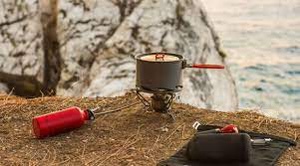
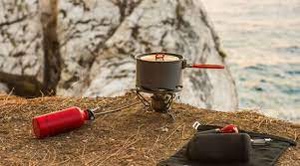
Remote Canister Systems aren’t all that different from the Integrated systems. The biggest difference is that, instead of the stove resting on the gas canister, you connect the gas canister to a gas line connected to the stove. This allows the stove to stand independently from the gas canister. Remote canisters are also sturdier than the integrated systems, as they rest on their own foundation base, instead of towering on-top of the gas canister. The Remote Canister Stove system often would have wider and larger arms, which provides better stability for larger pots. Unlike the Integrated systems, the Remote systems are windscreen-friendly.
Igniters – Most canister stoves have built-in sparking units, called Piezo igniters. Though this is very convenient, they are susceptible to wear and tear. They could be replaced, but it would be wise to have a back-up igniter, or lighter in order to prevent going without fire while in the middle of a hike.
Alcohol Stoves:
Alcohol Stoves are another very popular stove type with thru-hikers, and ultralight backpackers. The popularity stems from how easy and readily available it is to acquire denatured alcohol on a long trip, as well as how lightweight they are. Denatured alcohol is often sold at most markets or hardware stores. Alternatives to denatured alcohol to burn are Ethanol and Spirit. These stoves seem to be less fuel efficient than many of the other stoves, which forces you to take more fuel with, however, it would appear that the majority considered this a negligible factor, as the weight saved on the stove makes up for it.
To read more about this, visit this site.
Alternative-fuel Stoves:
Wood Stoves:
Woods stoves are extremely convenient with regards to fuel, because your fuel can be acquired at camp every day, and you have no need to carry the fuel around with you. The downside is that wood fuel might not always be readily available in the environment you are… ultimately meaning no fire. Additionally, as many parks or some states may have banned or regulates fires, it could definitely prove difficult to fully enjoy your stove everywhere.
Nevertheless, these stoves can burn just about anything you can fit in it. However, remember, this doesn’t mean you should use the annoying hiker’s possessions as fire fuel…
These stoves tend to be bigger and heavier, though many foldable and compact models do exist. Some models even come with built-in electronic converters, which converts the energy into juice for charging your devices… This definitely is a winner-winner chicken dinner deal.
In the end of the day, you would have to gauge your own situation and trip to determine whether this type of stove would be beneficial or detrimental to your experience.
Solid-Fuel Stoves:
This is another popular choice with ultralight backpackers. It often burns fuel cubes, or tablets, which could make it difficult to resupply on fuel. The difficulty stems from the fuel source not being as readily available as many of the other fuel types.
Winter Stoves: These aren’t necessarily any specific type of stove, but are mostly designed to operate in colder temperatures. They are designed to burn and retain heat at lower temperatures. They often use liquid fuel and can burn at -40. These are said to not simmer well, as they are “glorified flamethrowers” – backpackers.com. Additional accessories that could help burning at lower and more severe conditions are windscreens. These protect the flame from adversely being affected by less than ideal weather conditions. These are obviously not a fix all, as a windscreen might not do much to help against a hurricane, or a blizzard. It would have a better fighting chance though, if you’re brave enough to try.
Important to note, stoves’ output is measured by BTUs. BTU stands for British Thermal Unit, and is used as a unit of heat energy. The higher the BTU, the more heat it packs. Higher heat doesn’t necessarily mean better performance. I recommend researching the product itself, and reading reviews on it before purchasing.
For a solo backpacker, you can get survive with a BTU of 10 000 or less on your stove, but remember, the lower the BTU, the less heat, the more cooking time, and the more fuel is used to cook/boil.
What are the Pros and Cons of each?
Canister Stoves:
Pros:
– Small & Lightweight
– Easy & convenient to light thanks to the Piezo-igniter, and no priming necessary
– Easily adjustable flame, which can simmer well
– Self-sealing screw-on design
– Some models have a built-in pressure regulator. These allow for consistent heat output, which can improve performance in cold weather, and high-elevation.
Cons:
– The arms can sometimes be short or flimsy to hold larger pots securely.
– It is difficult to gauge how much gas your stove uses, or has left in the canister.
– Windscreens could trap excessive heat which could be really, explosively bad for the canister and stove.
– Cold weather can possibly depressurize the canister. To prevent this you need to get a stove pressure regulator.
– Fuel for the gas canisters are often greater than liquid-fuel for liquid-fuel stoves.
– Disposing of the empty canisters could prove troublesome, depending on the recycling laws and regulations of the area you are in.
– Depending on the terrain, due to the tall profile of the integrated system, the center of balance could be challenging if you are camping on a slope that can’t be adjusted. This inevitably leads to them tipping over easily.
– Canister stoves are usually designed to excel in boiling water, but not simmering and cooking.
Liquid-fuel Stoves:
Pros:
– Refined with few or no impurities (Not all, but most fuel)
– Performs well in below freezing temperatures and high altitudes
– Depending on the specific fuel and the country, it could run for cheaper than canister fuels when compared to the cost per ounce.
– Fuel versatility
Cons:
– Impurities in certain fuels other than white gas may dirty and clog some parts of your stove
– Often heavier than canister stoves
– Priming and maintenance (Especially for the inexperienced)
– The possibility of fuel seepage or spills if not careful
– Multi-fuel stoves tend to be more pricey
Wood-Stoves:
Pros:
– No need to purchase and carry fuel (
– Some models are simple and lightweight that are foldable
– Some models have the option for a grill
– Some models can convert the energy into charging juice for your devices with their built-in USB adapters
Cons:
– Weather conditions could seriously dampen your chances of finding dry burnable fuel around the camp
– Not all cheaper lightweight models are collapsable and fit nice and tight in your bag
– Fire bans and prohibitions would leave you at wits end
– Slower cooking times if your model doesn’t contain the heat effectively
Alcohol Stoves:
Pros:
– Fuel is easy to acquire in the US, with many variants across the globe
– Fuel is cheap
– Maintenance is not a big concern as fewer parts need to be kept in order
Cons:
– Doesn’t burn as hot as some of the other stove types, inevitably cooks slower
– Even though many other countries have their own versions of usable fuel, it might be more difficult to acquire, largely due to regulations and differences in terminology used to name the fuel.
– Windscreens are recommend… Highly recommended.
Solid-Fuel Stoves:
Pros:
– Stoves are often cheap
– Lightweight and small
– Can burn anything you can fit in it, but it is recommended to stick to the cubes or tablets
– Many countries have variants of the fuel available
– Fuel is reusable. Simply extinguish it and reuse it till it is burnt-out
Cons:
– Different countries have different names for the fuel, and may not necessarily have it as readily available as some countries
– Slower boiling and cooking efficiency
– Needs cleaning or preventative means to combat the residue left after burning
– Many stores might not necessarily cary this fuel as readily as some of the other fuel types
What are currently good cooking systems and brands? As recommended by Switchback Travel
MSR PocketRocket 2
Fuel type: Canister
Weight: 2.6 oz.
Integrated pot: No
What we like: Lightweight, inexpensive, and a surprisingly strong burner.
What we don’t: Integrated systems like the Jetboil Flash below are more stable and windproof.
Jetboil Flash Cooking system
Fuel type: Canister
Weight: 13.1 oz.
Integrated pot: Yes
What we like: Super fast boil time and a great price.
What we don’t: Only excels at boiling water.
Soto Amicus Stove Cookset Combo
Fuel type: Canister
Weight: 11.2 oz. (stove only: 2.9 oz.)
Integrated pot: No (pot included)
What we like: A great starter kit for a competitive price.
What we don’t: Not particularly lightweight and cookset isn’t very high quality.
MSR Reactor 1.7L Stove System
Fuel type: Canister
Weight: 1 lb. 2 oz.
Integrated pot: Yes
What we like: Efficient burner and fast boil time, no matter the weather.
What we don’t: Expensive, relatively heavy, and doesn’t simmer.
Jetboil Minimo Cooking System
Fuel type: Canister
Weight: 14.6 oz.
Integrated pot: Yes
What we like: Impressive simmer control for cooking over the flame.
What we don’t: Expensive and slower boil time than the Flash above.
MSR WhisperLite Universal
Fuel type: Canister/liquid
Weight: 11.2 oz.
Integrated pot: No
What we like: Multi-fuel compatibility and an invertible canister.
What we don’t: Expensive and a bit heavy.
Solo Stove Lite
Fuel type: Wood
Weight: 9 oz.
Integrated pot: No
What we like: Simple, efficient, and can double as a windscreen for an alcohol stove.
What we don’t: Some wilderness areas do not permit wood stoves.
MSR WindBurner Stove System
Fuel type: Canister
Weight: 15.3 oz.
Integrated pot: Yes
What we like: Excellent windy-weather performance for less than the Reactor above.
What we don’t: No built-in igniter and a little heavy.
Soto WindMaster Stove
Fuel type: Canister
Weight: 3 oz.
Integrated pot: No
What we like: More wind-resistant and efficient than the PocketRocket 2 above.
What we don’t: Heavier and pricier than the MSR.
Solo Stove Alcohol Burner
Fuel type: Denatured alcohol
Weight: 3.5 oz.
Integrated pot: No
What we like: A standout alcohol stove with a thoughtful design.
What we don’t: You’ll have to buy a pot stand and windscreen separately.
Snow Peak LiteMax
Fuel type: Canister
Weight: 2.0 oz.
Integrated pot: No
What we like: Very light and well-made.
What we don’t: Price jump for minimal weight savings.
Kovea Spider
Fuel type: Canister
Weight: 6 oz.
Integrated pot: No
What we like: 4-season capabilities at a very low weight.
What we don’t: Unlike the WhisperLite Universal above, the Spider isn’t multi-fuel compatible.
Jetboil Stash Cooking System
Fuel type: Canister
Weight: 7.1 oz. (stove only: 2.1 oz.)
Integrated pot: No (pot included)
What we like: Jetboil’s lightest and most compact offering yet.
What we don’t: Expensive, doesn’t simmer, and lacks Jetboil’s standard heat exchanger.
BRS 3000T
Fuel type: Canister
Weight: 0.9 oz.
Integrated pot: No
What we like: Really, really cheap and still works.
What we don’t: Inferior performance compared to the PocketRocket and similar models above.
Esbit Pocket Stove
Fuel type: Tablets
Weight: 3.25 oz.
Integrated pot: No
What we like: Cheap and ultralight.
What we don’t: Cooks slowly, messy and stinky, and no flame control.
What are good cooking system accessories?
– Windscreen / Windshield
– Fuel Adaptors (For different fuel types, or converting your stove into a remote system)
– Grills
– Funnels (Most used for refilling fuel)
– Fuel canister Stands or Stabilizers
– Fuel Canister Recycling tools
– Pot Supports
– Igniters/Lighters/Flint
– Pressure Regulators
–
Stove & Cooking Usage Tips and Tricks:
Cooking:
– Choose a pot with a lid, and arms
– Presoak longer-cooking foods in water before cooking / Alternatively boil the water first
– Take some herbs and spices to spice up your meals
Stove:
– Do not cook inside your tent. Unless your tent is well-ventilated, the fumes ain’t that great for your health. Cooking inside your tent is a very high fire risk, but nevertheless, you are the master of your own destiny. Maybe you like a more crispy tent.
– Actually regularly check the condition of your equipment and perform maintenance if applicable. The most important would be to check for damage and leaks. Check your fuel lines, valves and connections. Preferably check these every time before using your stove… It’s just safer.
– Always seek the most stable, level surface in the area. Nothing is more frustrating than tipping your food/coffee over.
– Consider a multi-tool as part of your maintenance kit
– If weight is not an issue, consider bringing your own level plate for your stove. This could be any flat, lightweight sturdy piece of anything. I know it’s not the best use for it, but since I always hike with my work tablet, I often use it as a sturdy level plate. I would recommend something less precious though.
– Bring a backup for your igniter/lighter. Many have suggested storm-proof matches, I back that, but personally just make use of rechargeable weather-proof lighters.
Tips on caring for your fuel canisters:
– Keep your canisters warm. Sleep with it in your sleeping bag if possible or necessary. This is to prevent the cold temperatures to reduce the pressure in the canister.
– Pressure regulators will increase fuel efficiency in higher elevations
– Don’t put your canister directly on the snow. Ice or snow could stick to the bottom, and unless removed, could melt in your bag and ultimately wet things that ought not be wet.
– Recycling is not always an option. Be prepared to carry them around for a bit, and please don’t just chuck it in a bush somewhere in the backcountry.
Low-down Tips for Liquid Stoves:
– Alcohol is a recommended primer (The pure alcohol, not your Monkey Shoulder)
– Leave a small bit of air in your container in order to pressurize your container properly
– Take precaution not to spill you fuel, especially not on yourself in colder conditions. This could be a painful experience.
– Don’t use old fuel. It degrades over time, and depending on the container, could also have sediment from standing too long. This could ultimately clog your stove.
All this information is from a variety of sources found online. I’m using it to prepare for thru-hiking, and hopefully it helps you as well. Since everyone has a different experience, I try to get the common ground before trying it out myself. Please share your insights, correct me where I’ve wronged, and most importantly, LIKE & Subscribe…
Thank you for reading 🙂

 Wandering Wentzel