
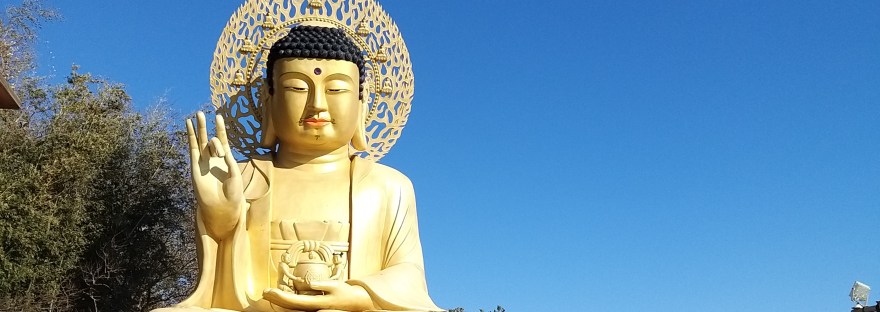
Buddha’s Birthday is a significant observance for many individuals in South Korea, recognized as a ‘red day’ on official public holiday calendars, typically denoted with red ink. This day is regarded as one of the most important religious events in the Lunar calendar and is celebrated not only in South Korea, but also in many other Buddhist-oriented nations. Its cultural and historical significance is widely acknowledged, as evidenced by its inclusion in UNESCO’s Intangible Cultural Heritage list in 2020.
Index:
1 – When is Buddha’s Birthday celebrated in South Korea?
2 – When and where was Buddha’s actual birth date and place?
3 – Where and how to celebrate Buddha’s Birthday.
4 – Best places to celebrate Buddha’s Birthday.
5 – History of Buddha’s Birthday.
1 – When is Buddha’s Birthday celebrated in South Korea?
Differing from many Western holidays, Buddha’s Birthday is determined by the Lunar calendar and therefore falls on a different date each year. It is celebrated on the 8th day of the 4th month of the Lunar calendar, corresponding to Friday, May 26 of 2023 according to the widely recognized Gregorian calendar. In the event of unfamiliarity with the Gregorian calendar, it is likely the calendar currently in use on your device. The celebrations do not solely take place on the designated date, however, festivities typically begin approximately a week prior. As such, anticipate an extensive week-long celebration.
2 – When and Where was Buddha’s actual birth date and place?
After conducting thorough research, it has come to my attention that multiple Buddhas exist, but only one holds the status of the original or originator, and is highly respected and regarded – I will refer to him as the OG Buddha. For readers not familiar with the term, OG is slang denoting the original or originator. An alternative shorter term is G. The OG Buddha is none other than Prince Siddhartha Gautama, Seokgamoni-bul in Korean. He was born on the 8th day of the 4th lunar month in Lumbini, Kapilavatsu, Northern India, which is present-day Nepal, many years ago.
3 – Where and How to Celebrate Buddha’s Birthday
For the purpose of this article, we will be focusing solely on the celebrations of Buddha’s Birthday in South Korea, even though the festivities take place across the entire planet.
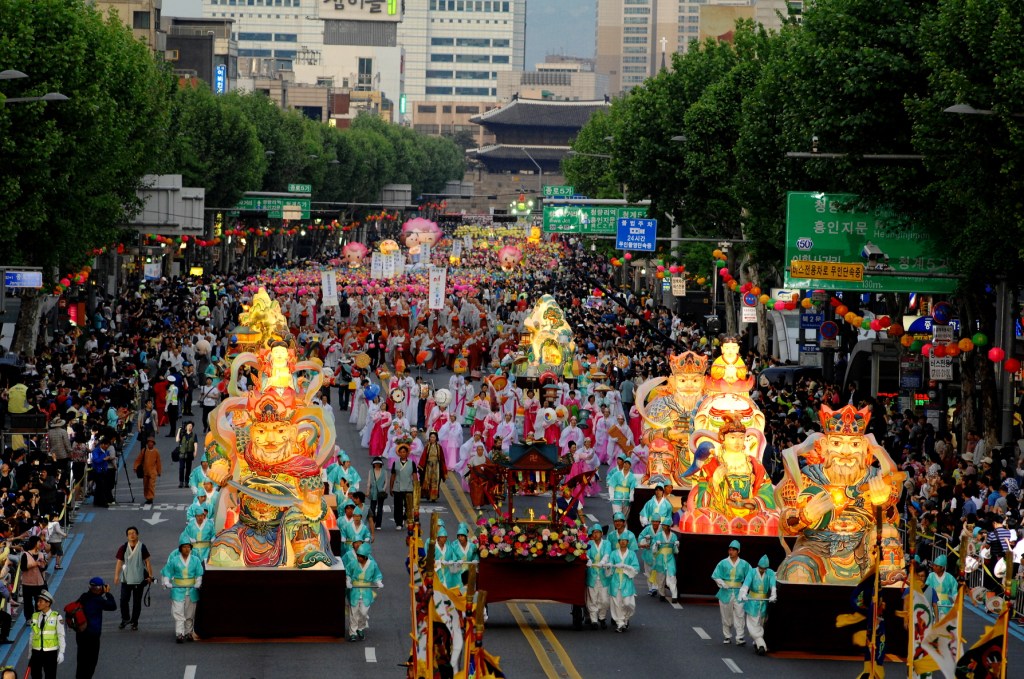
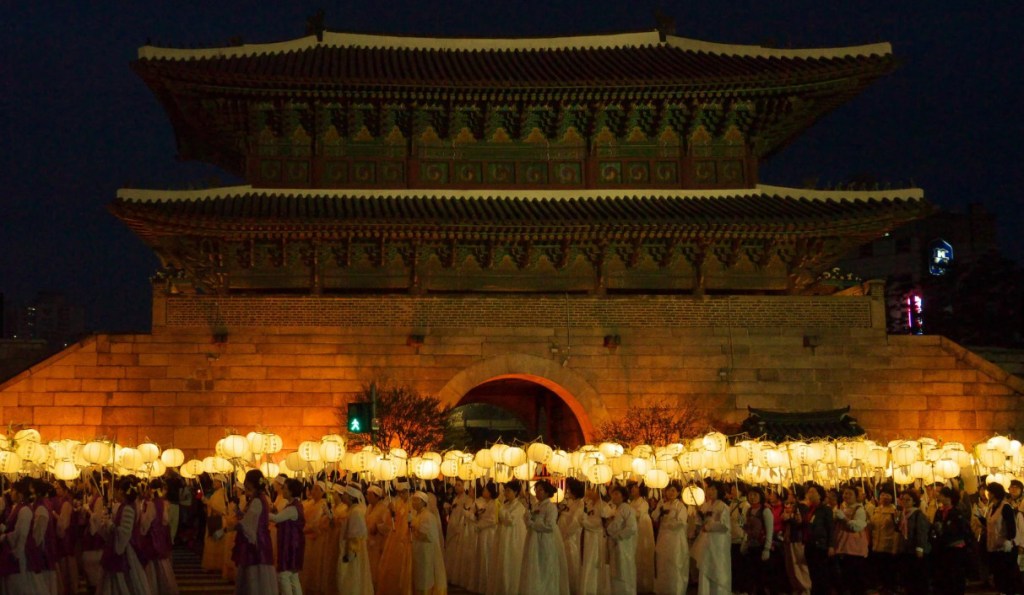
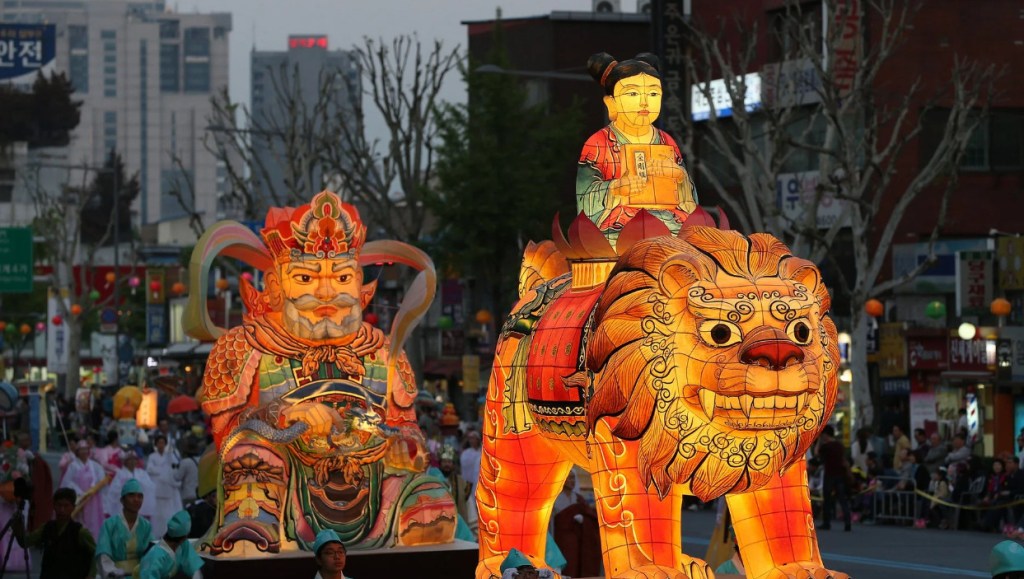
The center of attention during this momentous occasion is the Lotus Lantern Festival, known as Yeon Deung Hoe (연등회), which is a parade of lotus lanterns through the heart of Seoul. This parade usually takes place on the weekend preceding Buddha’s birthday, commencing at Dongguk University, moving through Jongro, the main road in central Seoul, and concluding at Jogyesa Temple. Arriving early, or late afternoon is recommended to secure a good view of the parade, which begins early evening, around 7 pm. However, arriving early is also not an issue, as there is plenty to do near Jonggak, Jongno 3-ga, or Jongno 5-ga subway stations. It is advisable to utilize the subway to access the destination, as the nearby roads are closed for traffic to facilitate the parade’s safe passage through Jongro.
The Korean people typically showcase thousands of lanterns displayed throughout the streets and parade exquisite and intricately crafted lanterns. Along with these, large parade floats with illuminated paper replicas of traditional Korean drums, a variety of fish and flowers, and fire-breathing dragons can be seen, created using paper and cloth strips. Although the primary parade and festival happen on a particular evening, the fun is not limited to those few hours. During the period of Buddha’s Birthday celebrations, a multitude of cultural performances and festivities take place on the streets and around well-known tourist/party destinations such as Insadong or Itaewon. Due to COVID-19, the parades and festivities were somewhat subdued; however, with the advent of 2023, we hope to witness a revival of the celebrations that will surpass everyone’s expectations once again.
4 – Best areas to celebrate Buddha’s Birthday
If you’re planning to witness the celebrations of Buddha’s Birthday in South Korea, you’ll find that the festivities are not limited to central Seoul. While the metropolitan cities offer epic modern celebrations, the traditional temples and smaller towns provide a more authentic experience. So, depending on your preference, you can choose between old school or modern celebrations.
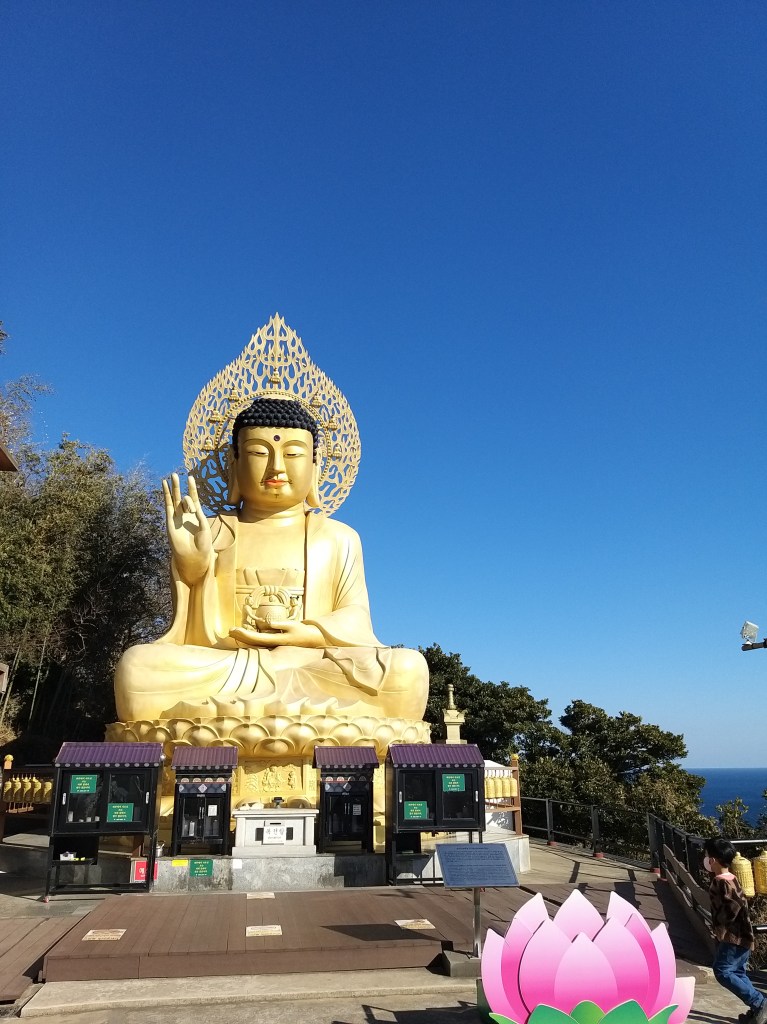
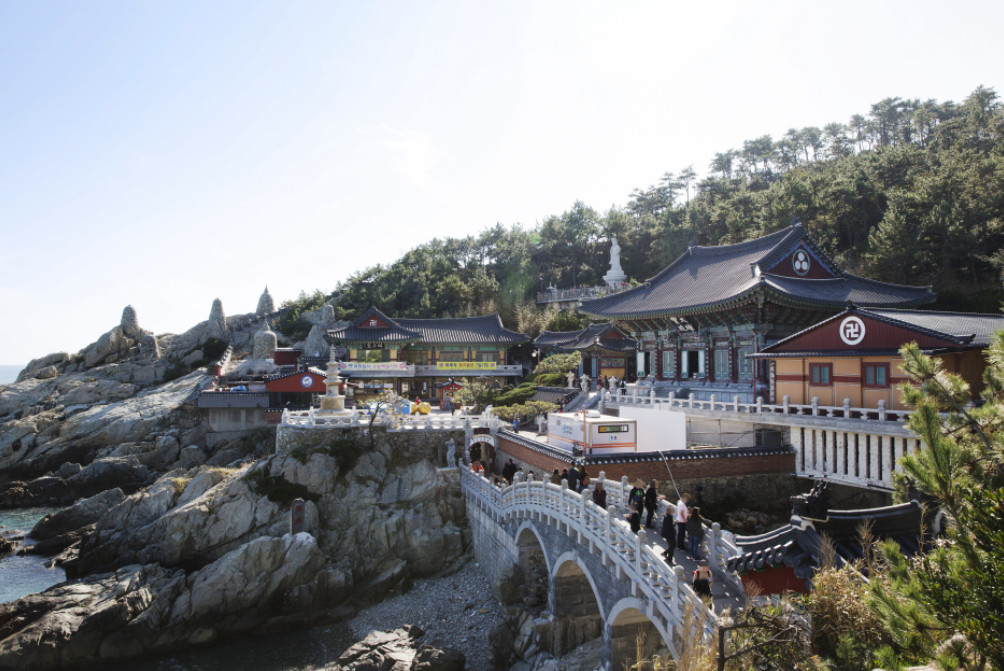
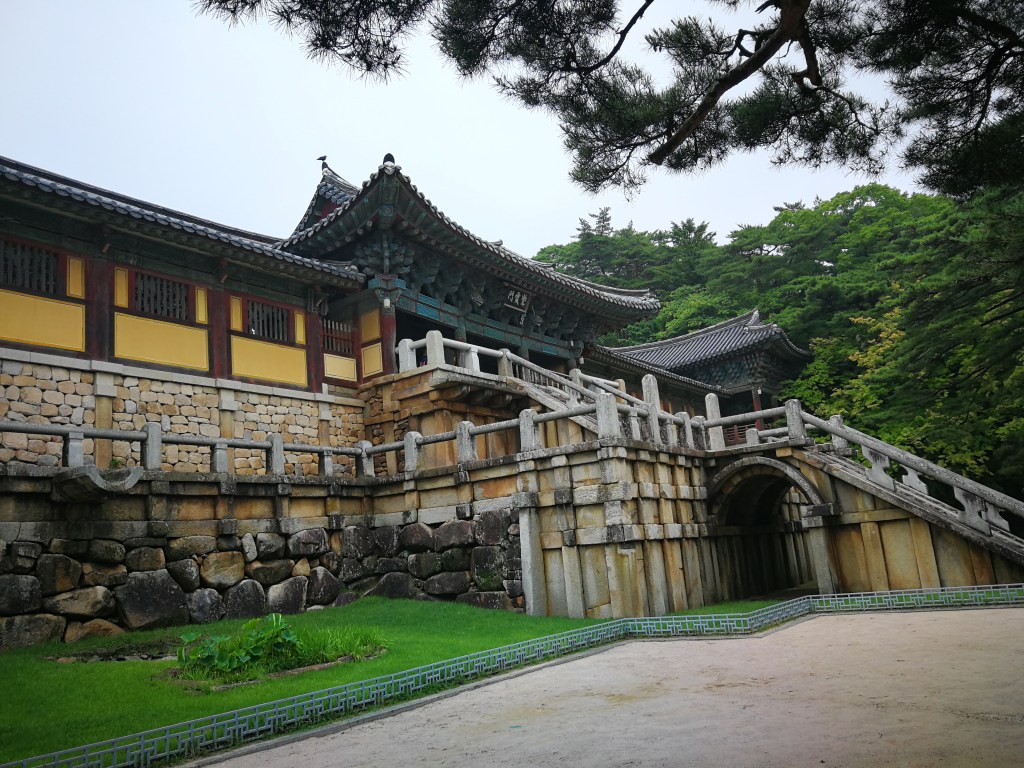
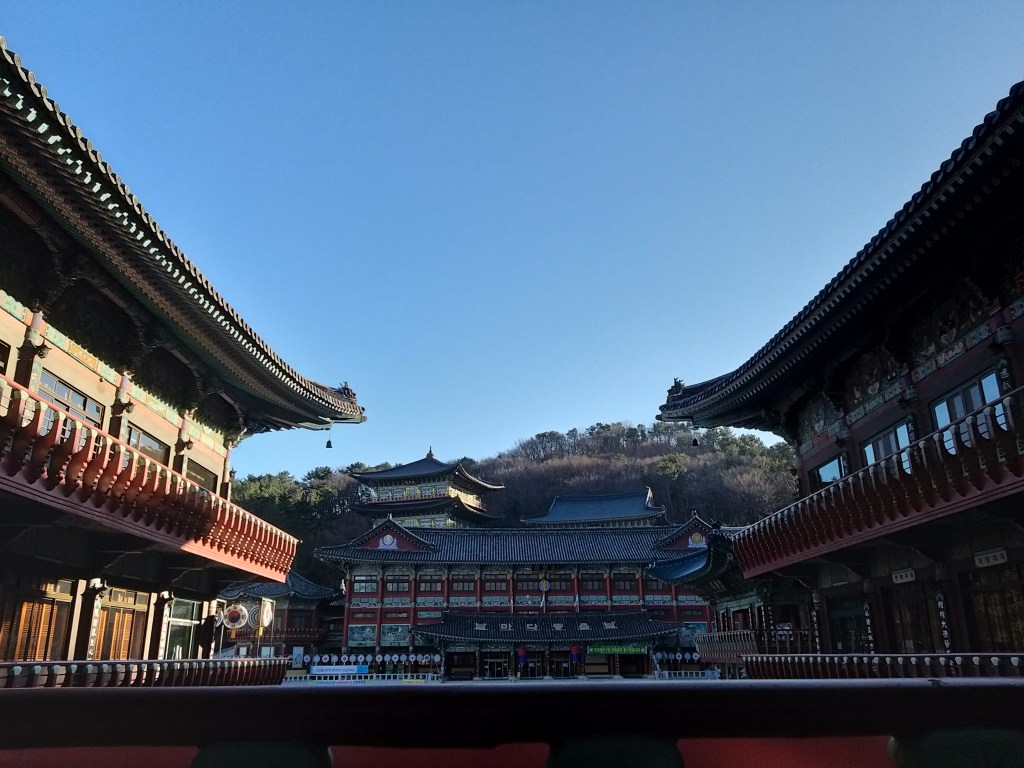
For those interested in traditional celebrations, I recommend visiting Bulguksa in Gyeongju, Haeinsa in Hapcheon, or Haedong Yonggungsa in Busan, which is my personal favorite cliff-side ocean temple. The Jogye-sa Temple and Bongeunsa Temple, both located in Seoul, are other great options for traditional celebrations, with Jogye-sa being the most famous temple in the country.
On the other hand, if you prefer modern celebrations, you can’t miss the Lotus Lantern Festival in Seoul and the Lotus Lantern Festival in Busan, both featuring parades with Buddhist monks and the public. Additionally, the Wind/Floating Lantern Festival in Daegu, alternatively known as the Dalgubeol Lantern Festival is an alternative option with a range of activities, from cultural stalls to archery, drumming, and mask drawing.
It’s worth noting that if you’re looking for free bibimbap and offerings to Buddha, you should head to Beopjusa in Boeun-gun, Chungcheongbuk-do, located in the Songnisan National Park. For breathtaking views of Busan city and the most extravagant displays, Samgwangsa Temple in Busan is a must-visit, though be prepared to climb some stairs if parking at the top is full.
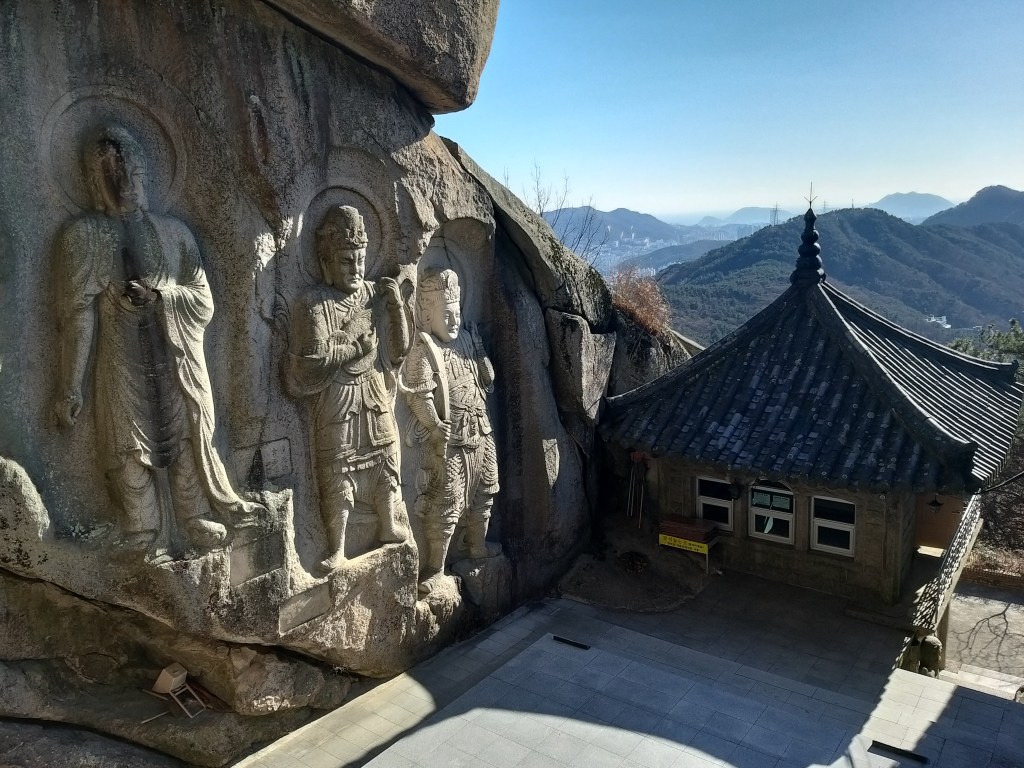
One of the more interesting and exciting temples I have visited, but does not necessarily compare with the others, is Seokbulsa Temple in Busan. I am not certain how they celebrate Buddha’s Birthday, but if in the vicinity, this temple is definitly worth the visit.
5 – History of Buddha’s Birthday
The arrival of Buddhism in South Korea dates back to the 4th century, specifically during the Goryeo Dynasty. Eventually, Buddhism spread throughout the nation and became the most popular religion. However, during the Joseon Dynasty, Confucianism was favored, and this inevitably led to the suppression of Buddhism. Presently, Buddhism and Christianity are the two main religious systems in South Korea.
Due to the neo-Confucian policies implemented during the Joseon Dynasty, many Buddhist celebrations disappeared from practice and memory. Although most people still celebrated some version of Buddha’s Birthday, the festivities shifted focus from Buddha’s Birthday to the Lotus Lantern Festival, ultimately becoming more of a public festival. People would still light lanterns and pray for the well-being of their families, but they would also spend money to enjoy themselves. The holiday became a massive shopping holiday, ultimately distancing itself from its original meaning. The shift began to change near the end of the Joseon Dynasty when Korean monks encountered monks from other countries. The heightened presence of Japanese Buddhist monks, with the ever-increasing involvement of Japan in Korean affairs, from the 1900s onwards, played a crucial role in this change.
The Korean government became more accepting of Buddhist ideology, which was closely linked to Japanese nationalism. In 1902, a ceremony was held at Wonheungsa Temple, which later became known as Gaghwangsa Temple and ultimately as Jogyesa Temple. This ceremony attempted to link Korean Buddhism with international Buddhism, but it played a part in linking Japan to Korea through the Japanese colonial government of 1910 to 1945. By 1913, the celebration had grown so popular that tickets were sold to attend the event. Celebrations also occurred in other areas of Korea, not just Seoul. During the 1920s, Korean Buddhism once again focused on bringing Buddha back into the Lantern Festival celebrations. In 1928, the Japanese government attempted to collaborate with Korean monks to create a modern interpretation of Buddha’s Birthday celebrations that would consolidate the two nations into a single identity aimed at combating militant Christian Missionaries in the Korean Peninsula. The Japanese referred to this festival as Hana Matsuri, while the Koreans called it Hwaje, which both mean Flower Festival in English.
This cooperation continued from 1928 up until 1945, at the end of the Japanese colonial rule. The first Hana Matsuri/Hwaje took place in Seoul at Mt. Namsan, famous today for the Seoul N-tower. The festivities began with fireworks, followed by a shower of one million blue and red petals and an additional 30,000 flyers promoting the festival. The original festival was both a private and public event. Once ceremonies were concluded in private at the Gakhwangsa Temple, the parade continued away from the temple. The parade featured a sculpture of a white elephant led by thousands of Korean and Japanese students, all accompanied by lanterns and dozens of monks. These processions also displayed colorful floats and flowers.
After Japanese rule, Korean monks continued to change the festival and the celebration of Buddha’s Birthday. They changed it so much, in fact, that they published a book on the 100-year history of the Lantern Festival, titled “A Century of the April Eighth Ceremony,” to help provide an identity to the Lantern Festival. Unfortunately, this book did not include much about the colonial period. Despite the change in name to Yeonggotchukjae, and reverting back to the Lunar calendar instead of the Gregorian calendar (which Japan utilizes), most of the format and structure of the Hana Matsuri remained and carried over to the Korean Lantern Festival.
Interestingly, modern-day Korean Buddhism ended up taking a back seat to the growth of Christianity in Korea after the US forces aided in the after the end of Japanese colonial rule in 1945, Korean monks continued to modify the festival and the celebration of Buddha’s Birthday. In fact, they published a book on the 100-year history of the Lantern Festival entitled “A Century of the April Eighth Ceremony” to help provide an identity to the festival. Unfortunately, the book did not include much information about the colonial period.
Despite changing the name to Yeonggotchukjae and reverting back to the lunar calendar instead of the Gregorian calendar (which Japan utilizes), most of the format and structure of the Hana Matsuri remained and was carried over to the Korean Lantern Festival.
It is interesting to note that modern-day Korean Buddhism took a backseat to the growth of Christianity in Korea after the US forces aided in the administration of the Korean Peninsula post-1945.
I hope you enjoyed and learnt from the article. If you have any questions, or contributions about Buddha’s Birthday, where to celebrate it, or any other matter, feel free to let me know.

 Wandering Wentzel